New publication “Collective Retraumatisation of Minority and Indigenous Groups during the Global Health Crisis”
We are happy to share our most recent publication “Collective Retraumatisation of Minority and Indigenous Groups during the Global Health
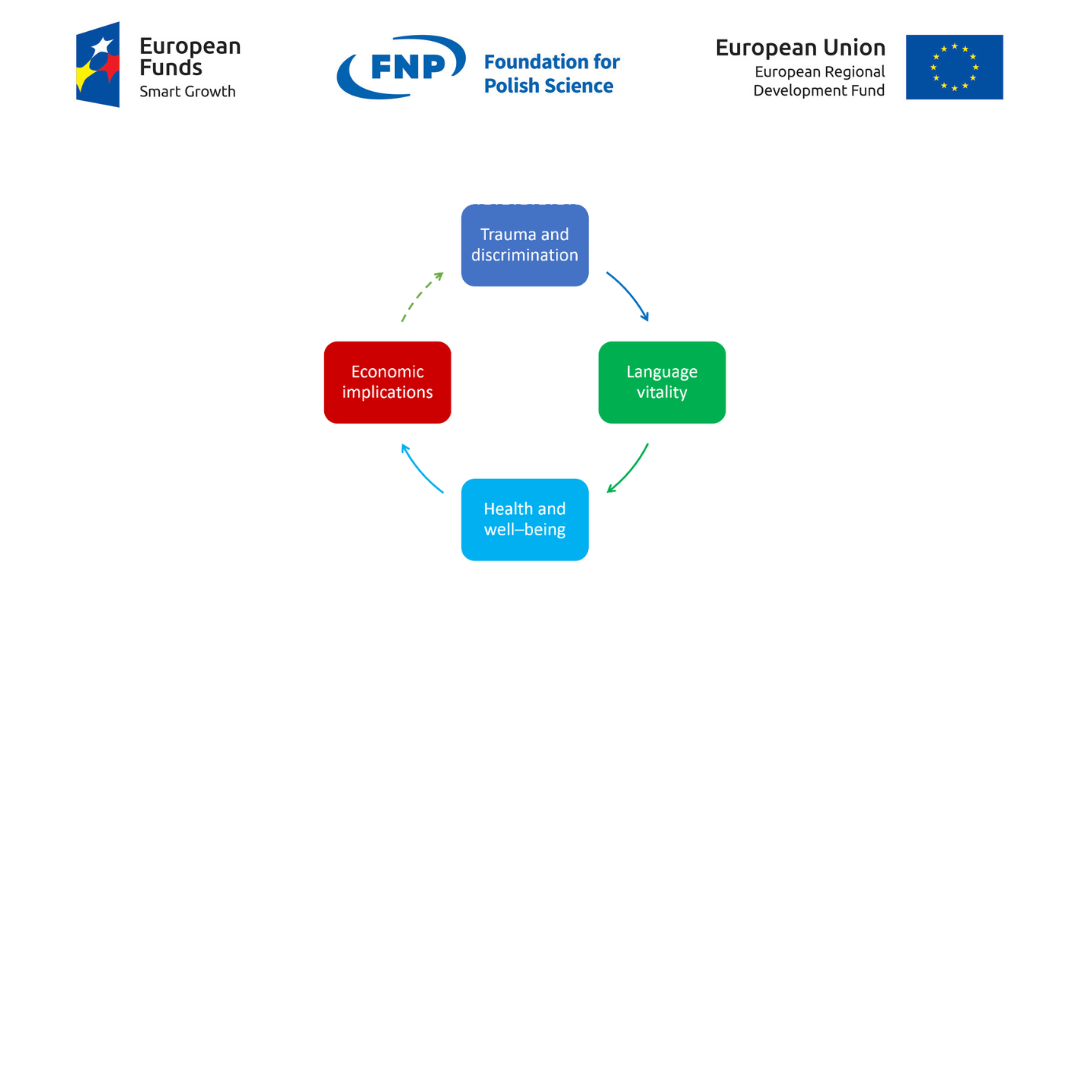
We are happy to share our most recent publication “Collective Retraumatisation of Minority and Indigenous Groups during the Global Health
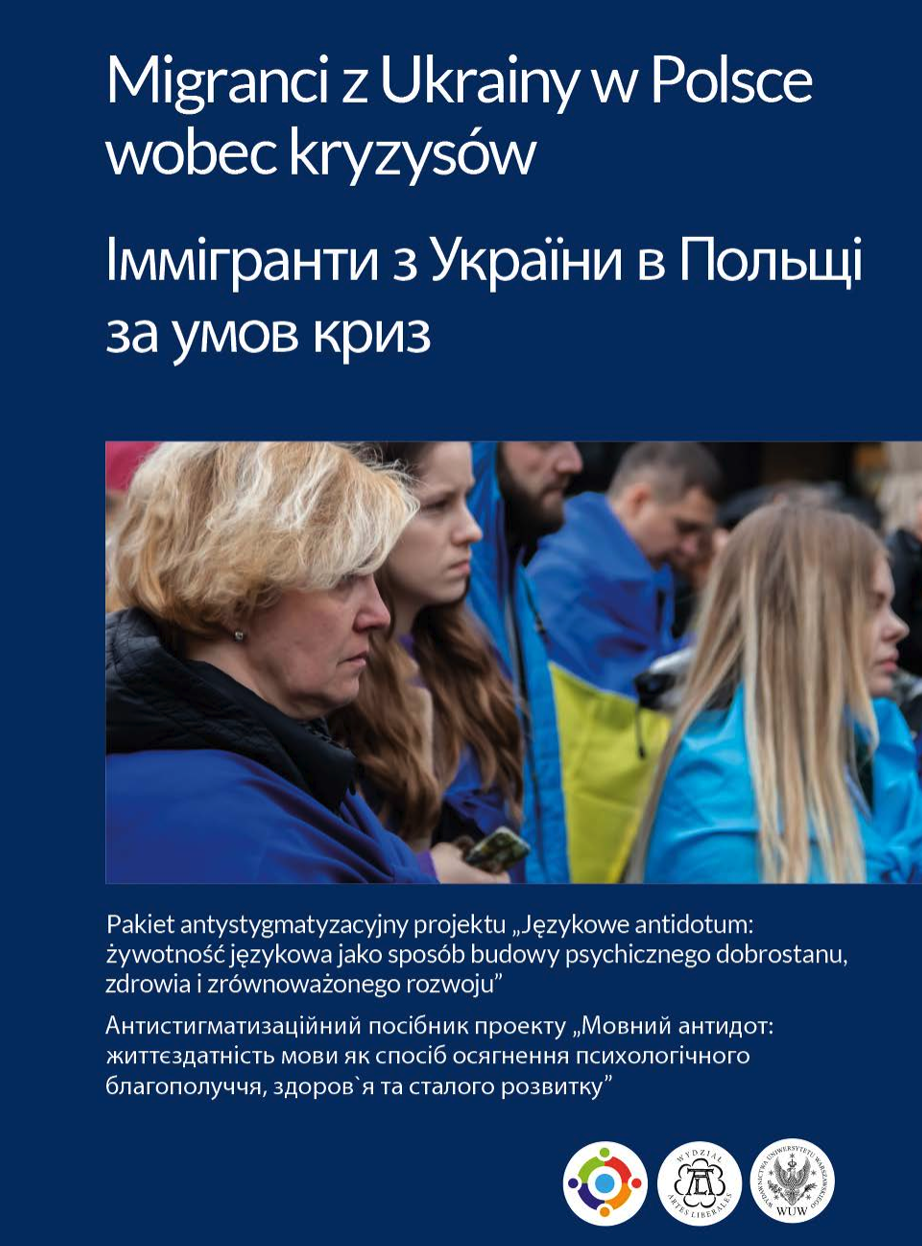
Publikacja zawiera wielopoziomową interdyscyplinarną analizę sytuacji imigrantów z Ukrainy w Polsce. Autorzy szczególną uwagę poświęcili kluczowym wyzwaniom, takim jak sytuacja
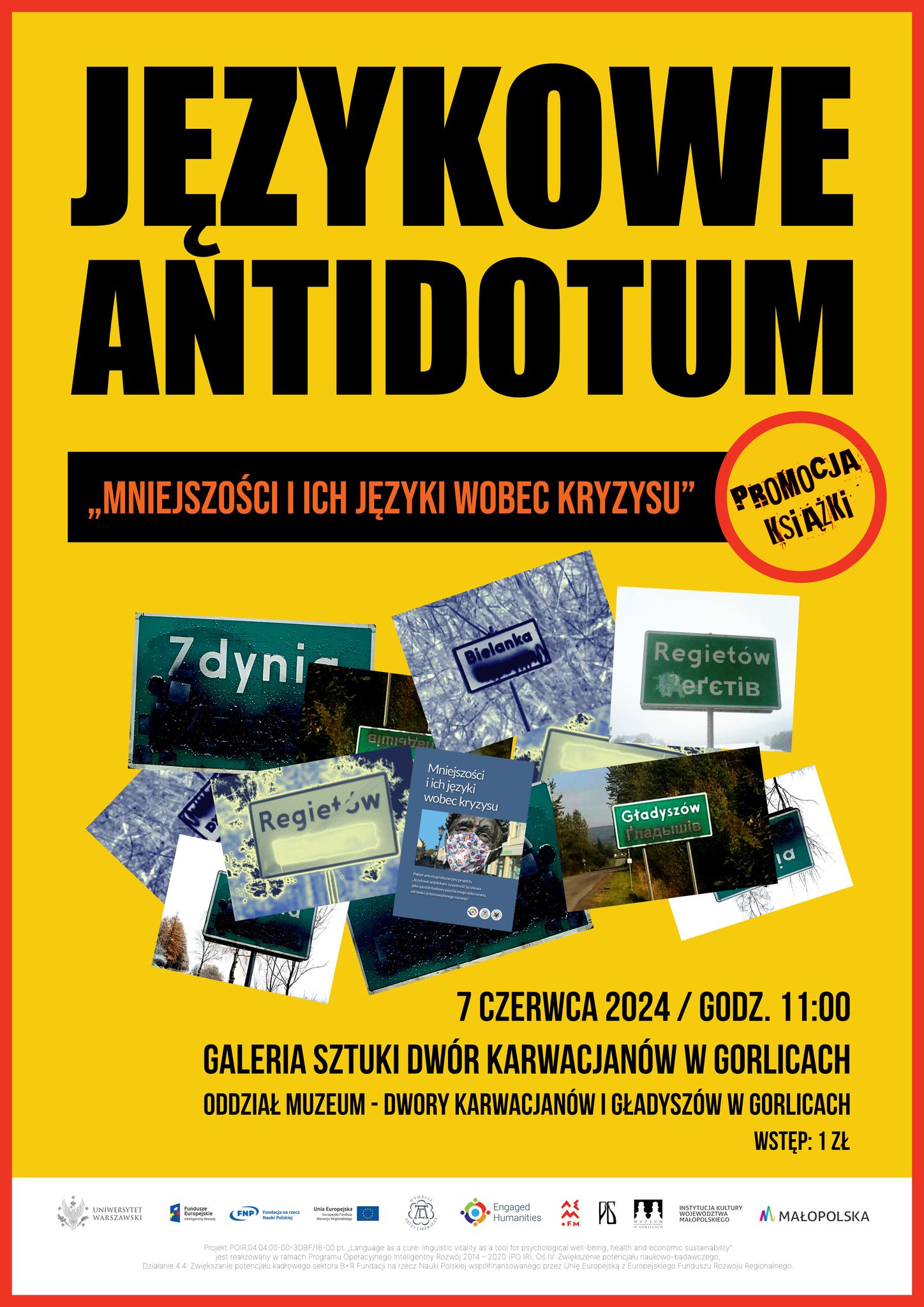
Zapraszamy na prezentację i promocję książki “Mniejszości i ich języku wobec kryzysu”, zorganizowaną wspólnie z łemkowską instytucją partnerską, Ruska Bursa.
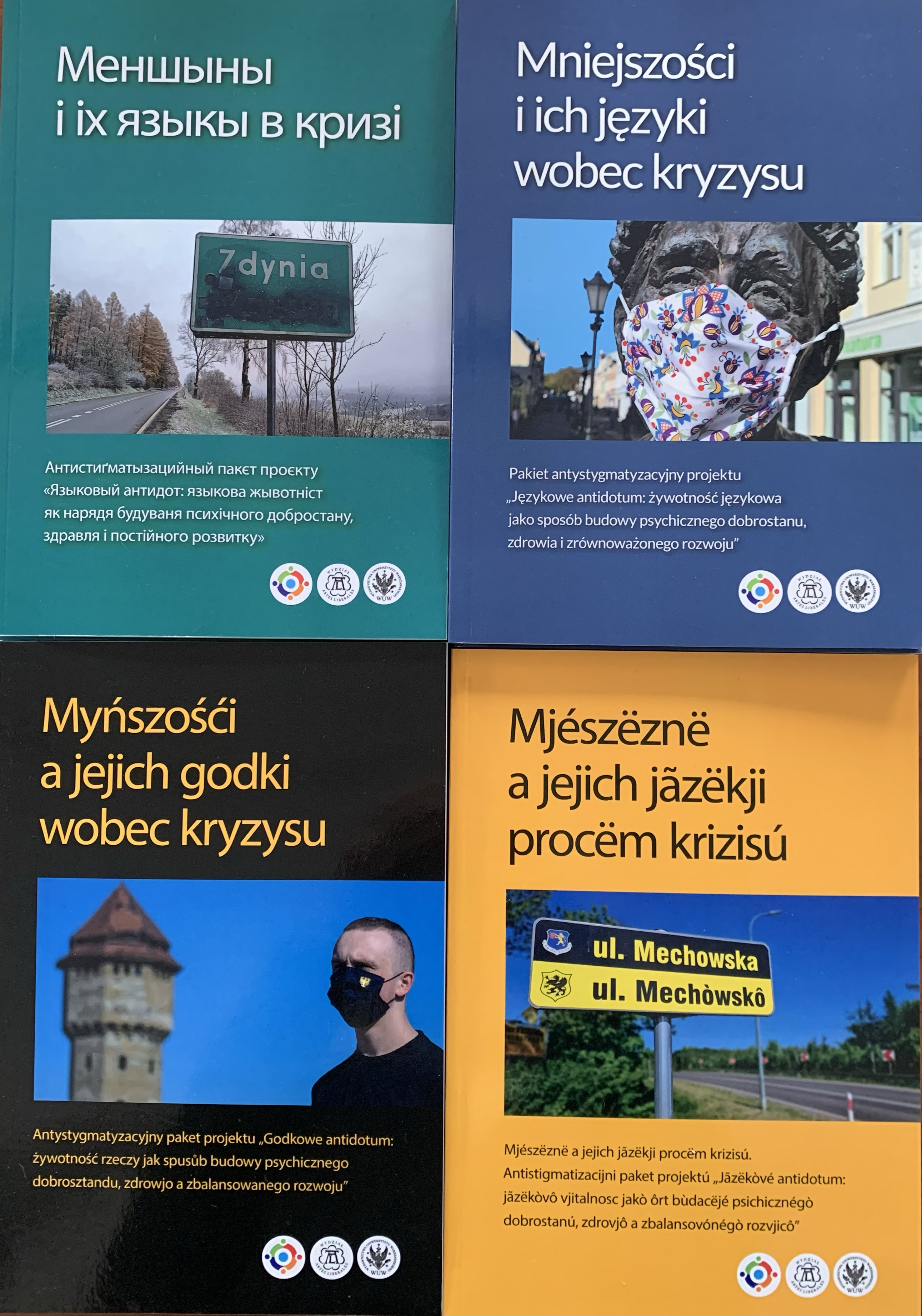
Our Language as a Cure project’s antistigma package with a critical diagnosis of the situation of language minorities in Poland
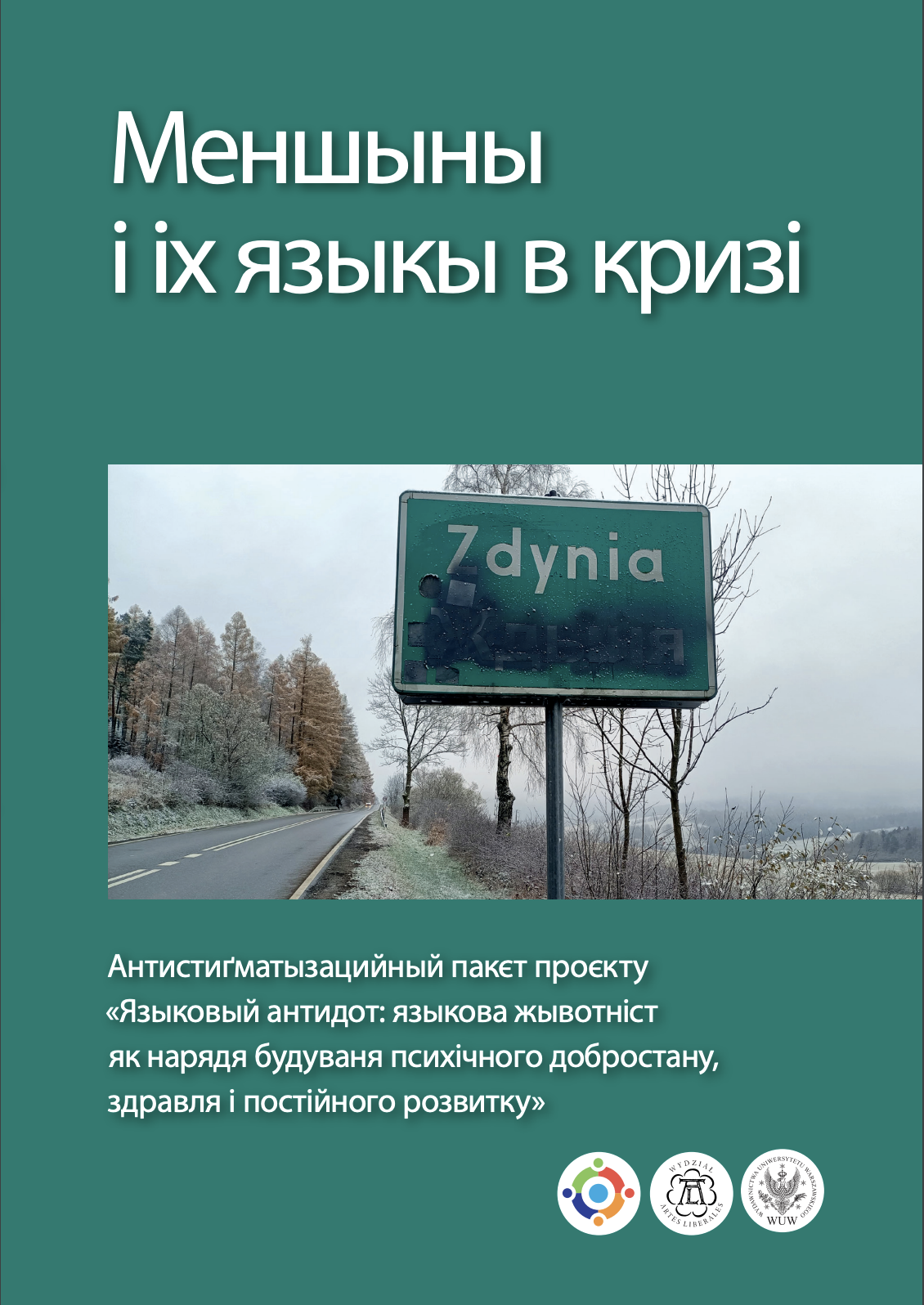
Як раз вказала ся лемківска версия антистиґматызацийного пакєту проєкту Language as a Cure «Меншыны і іх языкы в кризі». Публикация

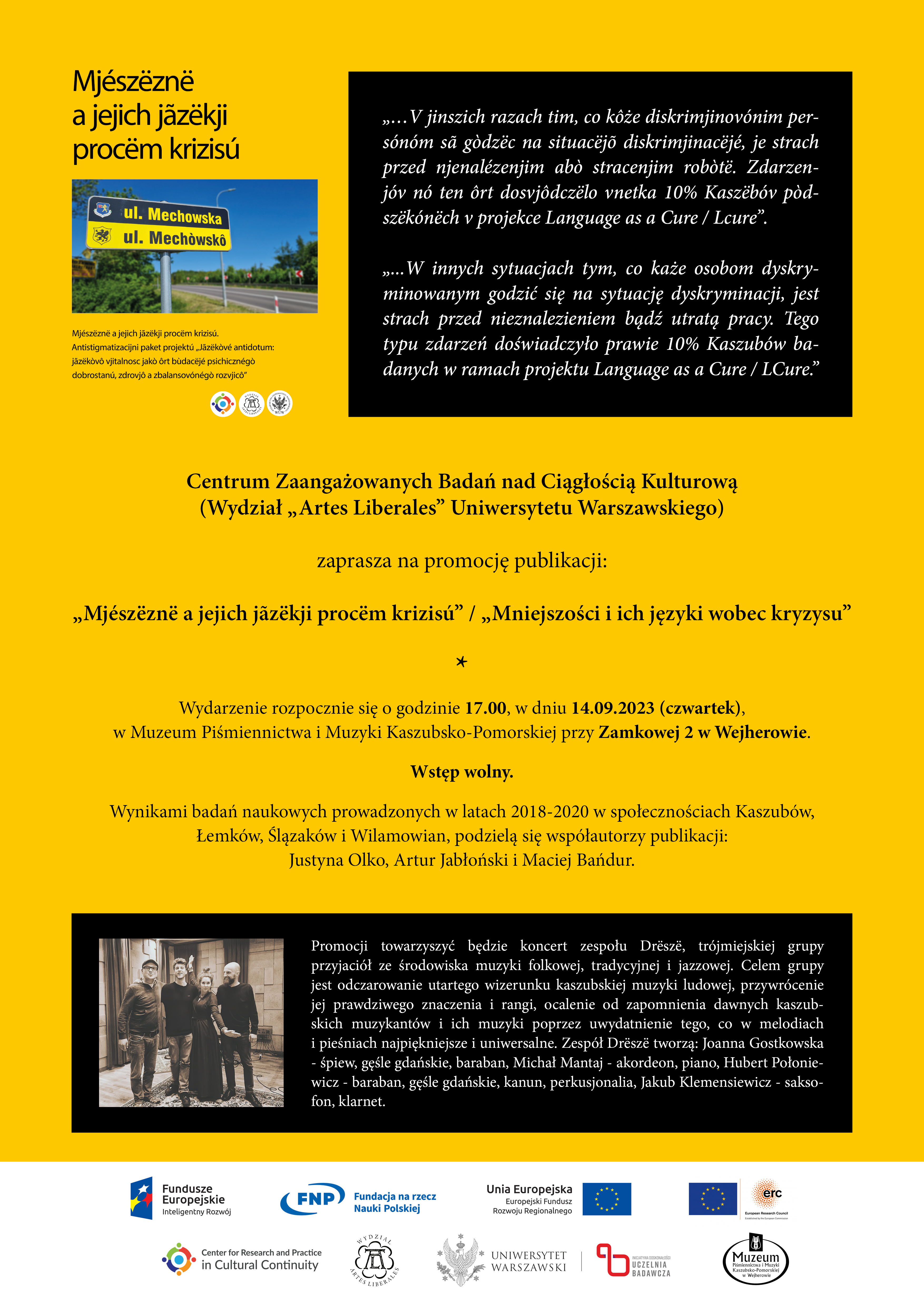
W czwartek 14.09.2023, zapraszamy na 17.00 do Wejherowa! W siedzibie Muzeum Piśmiennictwa i Muzyki Kaszubsko-Pomorskiej przy Zamkowej 2 Justyna Olko,
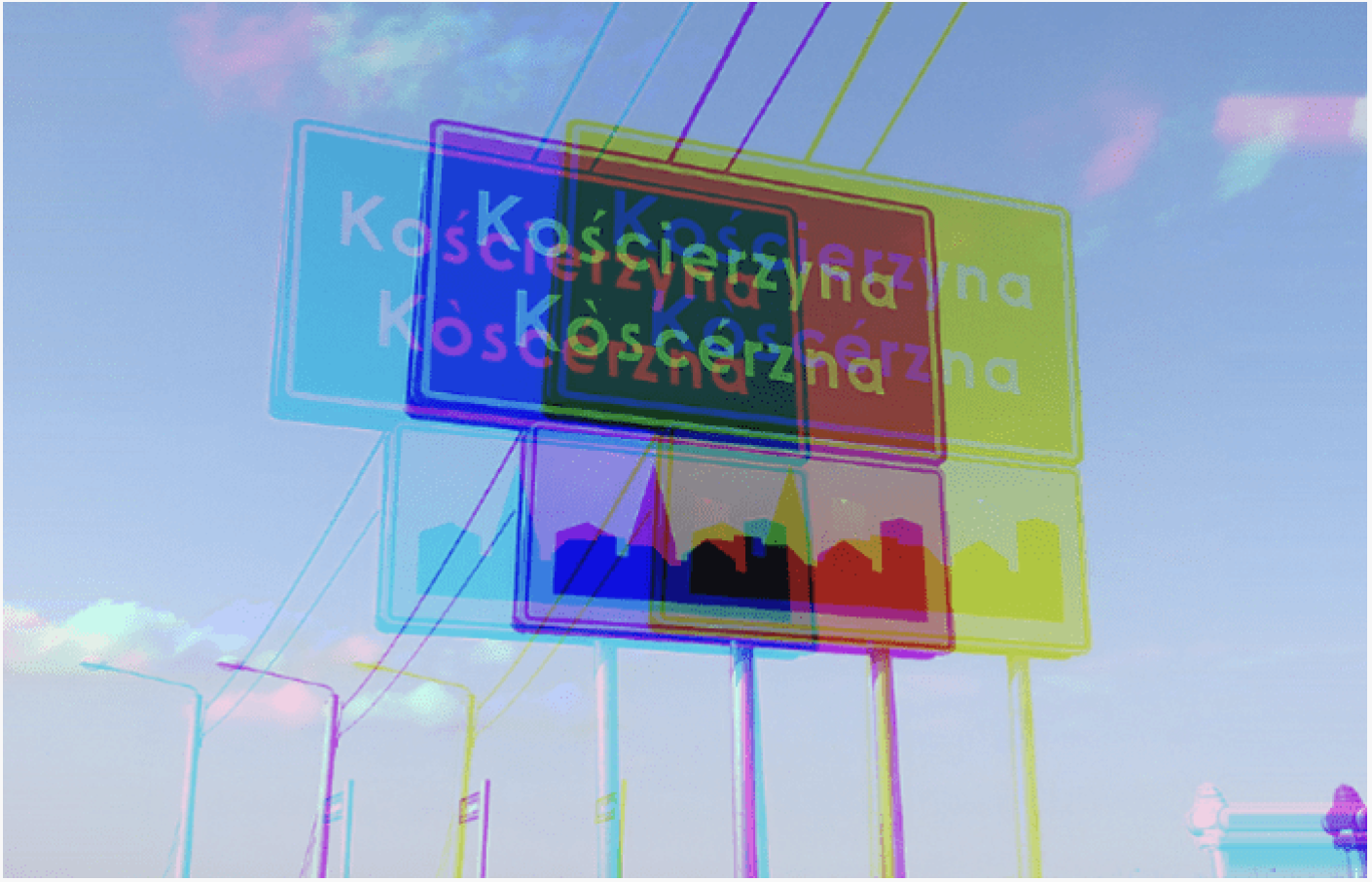
The results of the 2021 census in Poland produced a shock for Kashubians, a small minority in northern Poland little-known
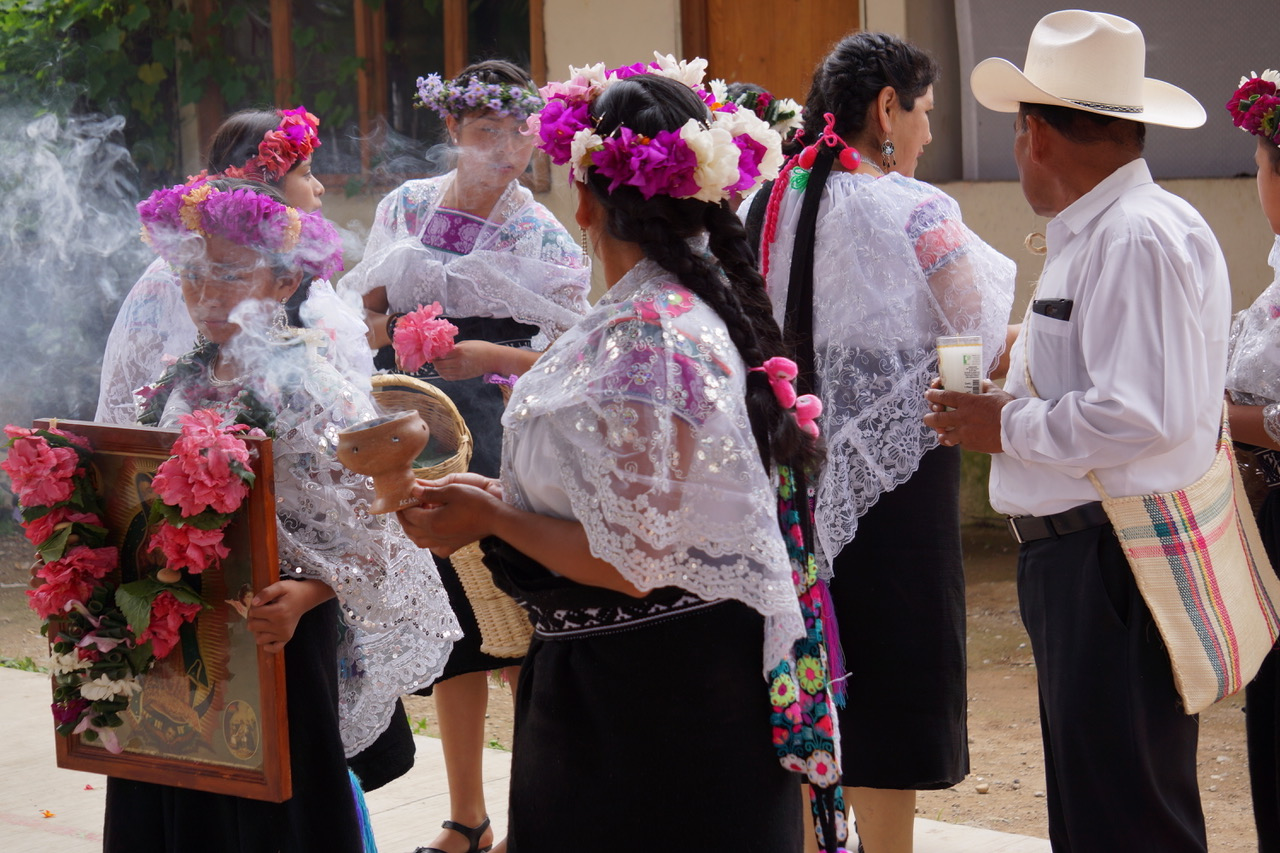
Nasze badania przeprowadzone w ramach projektu “Językowe antidotum/Language as a Cure” wspólnie z badaczami z Collegium Medicum UJ oraz ekspertami

O wynikach naszego projektu “Językowe antidotum/Language as a Cure” pokazujących, jak mniejszości etniczne, grupy rdzenne i migranci reagowali na zagrożenia związane z
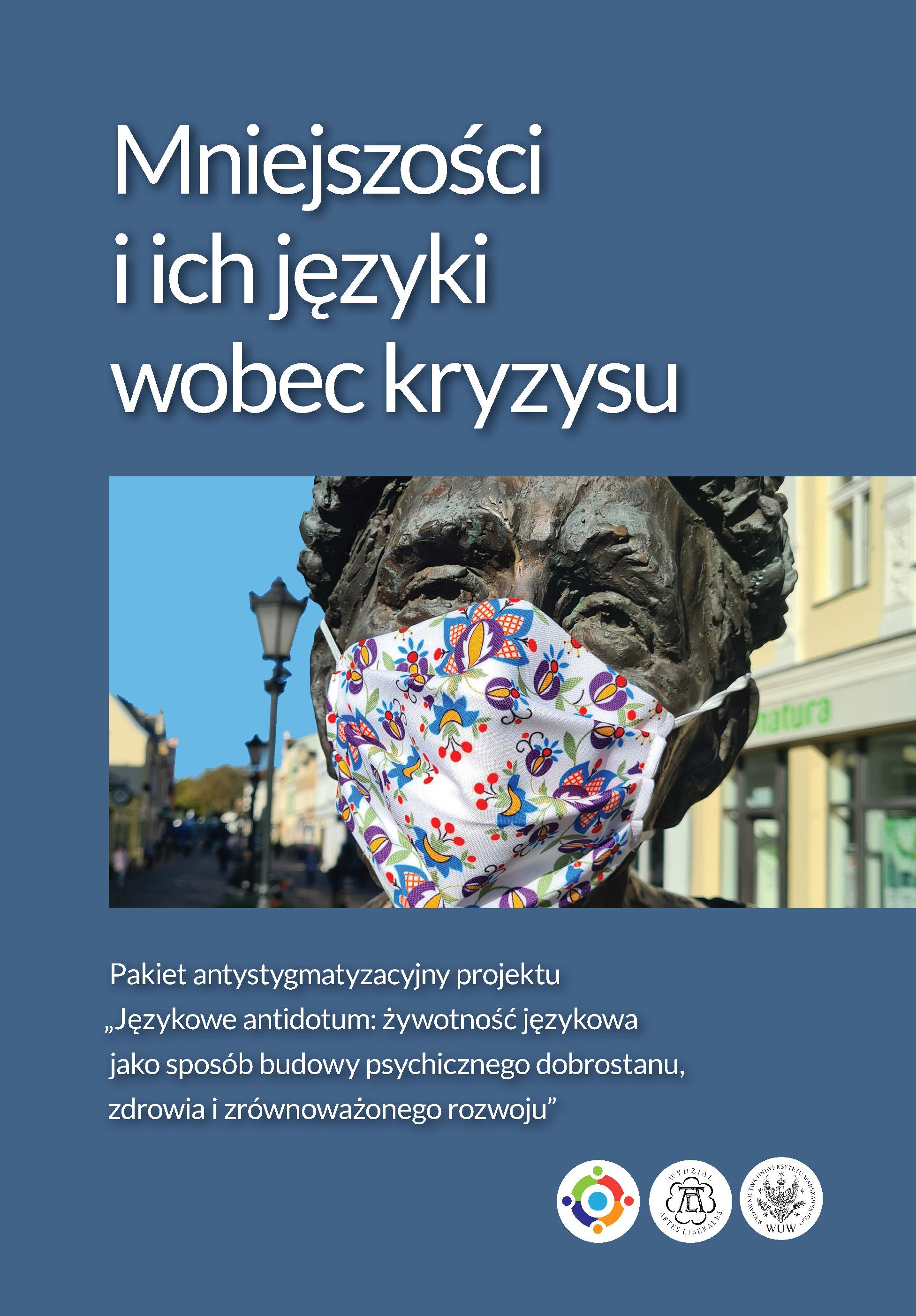
«Ślůnsk je uodpedźalny za pandymijo»; COVID-19 we Polsce skůńczůł by śe, «kej by ńy Ślůnsk»; «Skůnd zwůńiće? Ze Ślůnska? Ńy
Ȧ hefa möł kontakt myter hasryd cy derława kon śłȧht ufa gyzunda ȧjfłisa. S’bȧdȧn wȧjzt oü, do s’ferbrȧta zih fur
Situacëje, co v tëch Kaszëbji, przez svòje etnjiczné pòchôdanjé, nôrodnosc ë apartni jãzëk, sõ traktovóni jak jinszi człovjek v javerni
Вельоаспектовы наслідства долготырвалых опресийных діянь єдной групы взглядом другой з причыны єй національной, етнічной або реліґійной приналежности окрислят ся терміном
Jak przeciwdziałać stygmatyzacji grup mniejszościowych? Stan badań, wnioski i praktyczne rekomendacje na ten temat opublikowane zostały w pakiecie antystygmatyzacyjnym „Mniejszości
The spiral of disadvantage: Ethnolinguistic discrimination, acculturative stress and health in Nahua indigenous communities in Mexico Justyna Olko, Andrzej Galbarczyk, Joanna Maryniak, Karolina
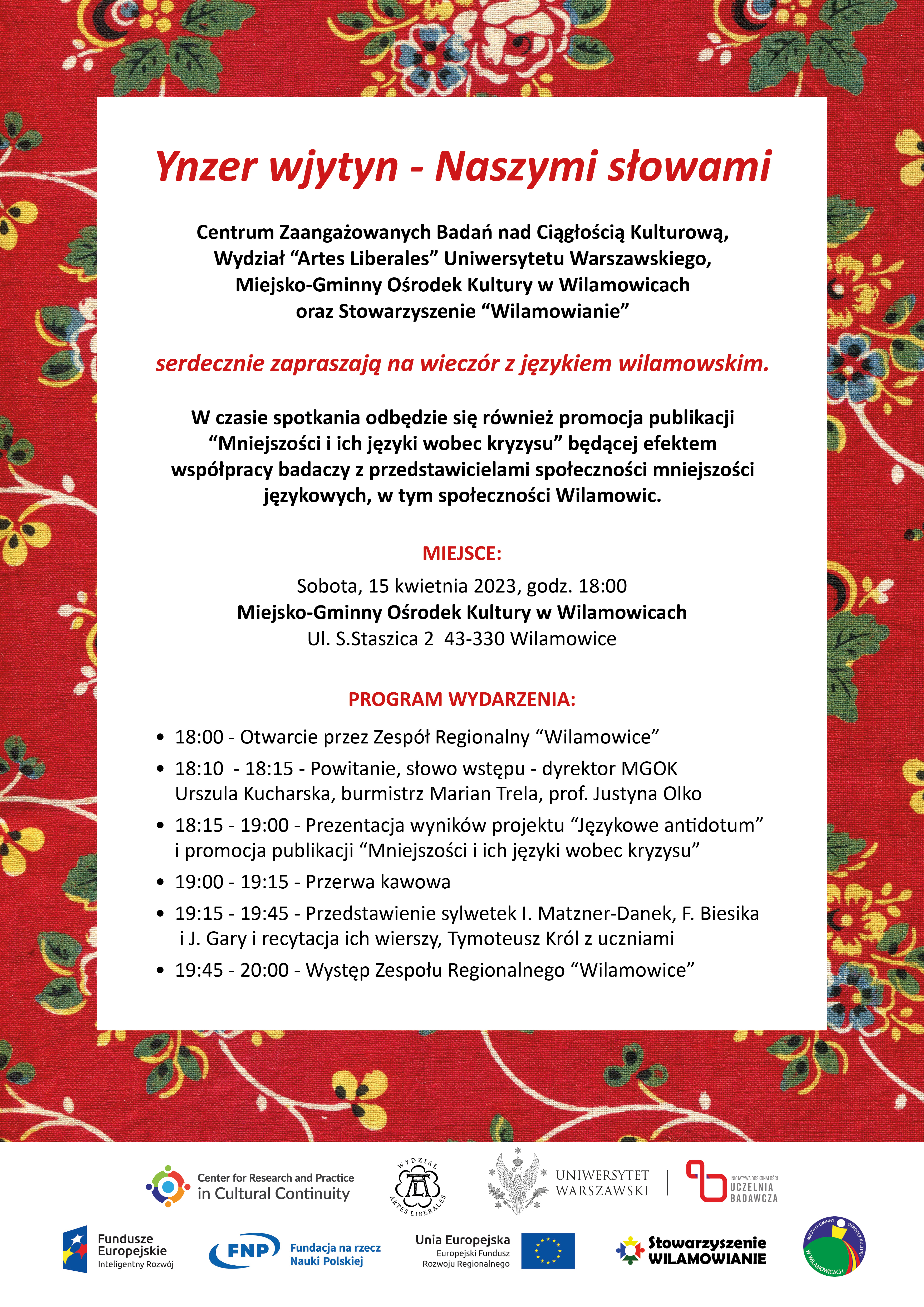
W dniach 14-16.04 odbędą się w Wilamowicach warsztaty dla członków i współpracowników Centrum: Różnorodność Językowo – Kulturowa a lokalne ekologie
Як раз вказала ся лемківска версия антистиґматызацийного пакєту проєкту Language as a Cure «Меншыны і іх языкы в кризі». Публикация
Language as a Cure: Linguistic Vitality as a Tool for Psychological Well-Being, Health and Economic Sustainability The publication, which is
Szymon Gruda, Gregory Haimovich, John Sullivan (2022) Lexical creativity in modern Nahuatl: An analysis of multidialectal data. Published online: February
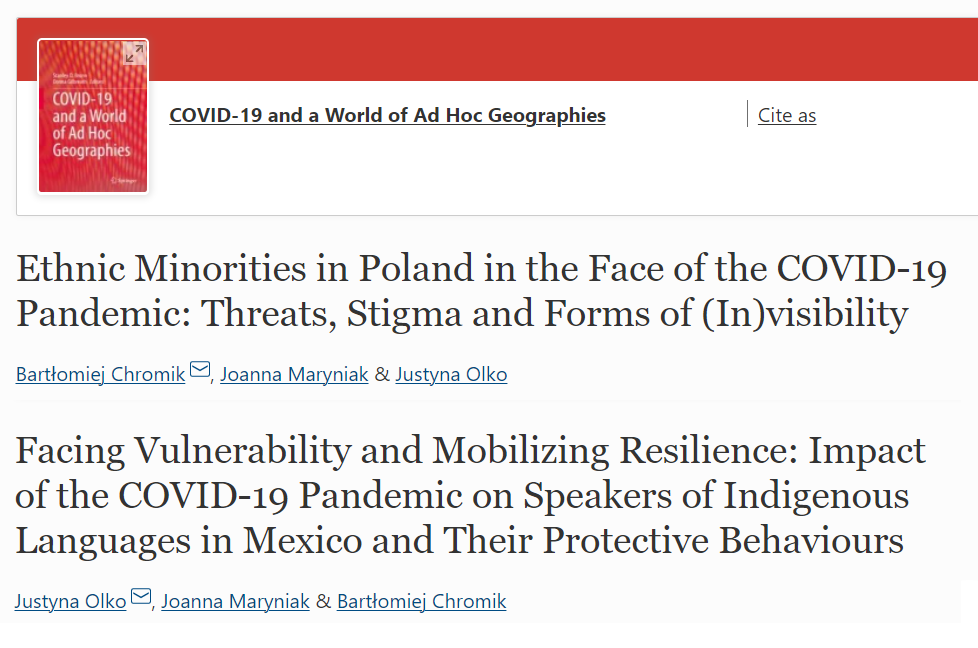
Two new chapters featuring COVID-19-related research by members of our Center have just been published in COVID-19 and a World of
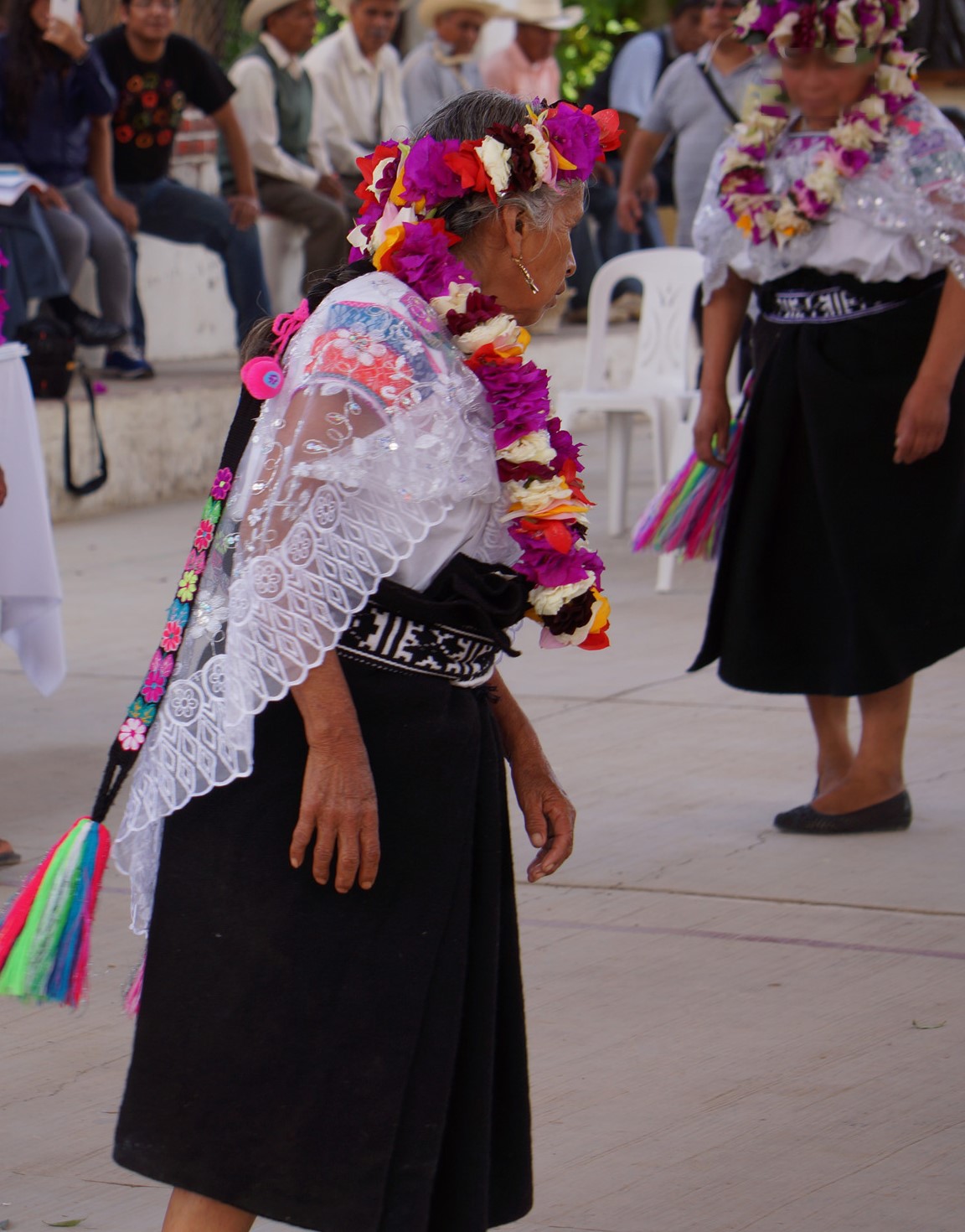
Results of our Language as a Cure project (TEAM Program, FNP) carried out at in collaboration with Nahua communities in Mexico. Olko, J.,
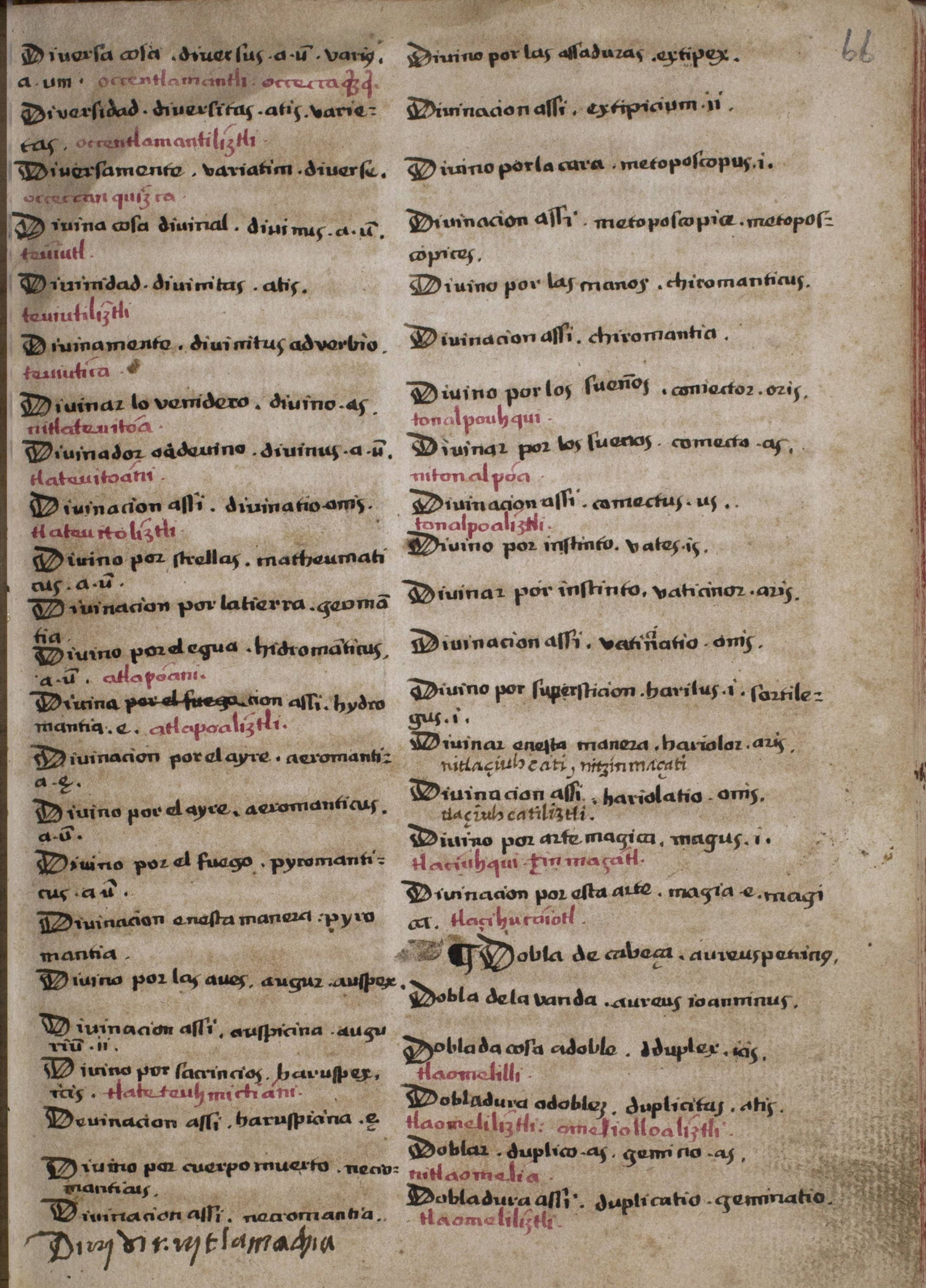
Szymon Gruda, 2021. Translating the divine: culture contact and language planning from within in a sixteenth-century Nahuatl dictionary CLAR, Pages
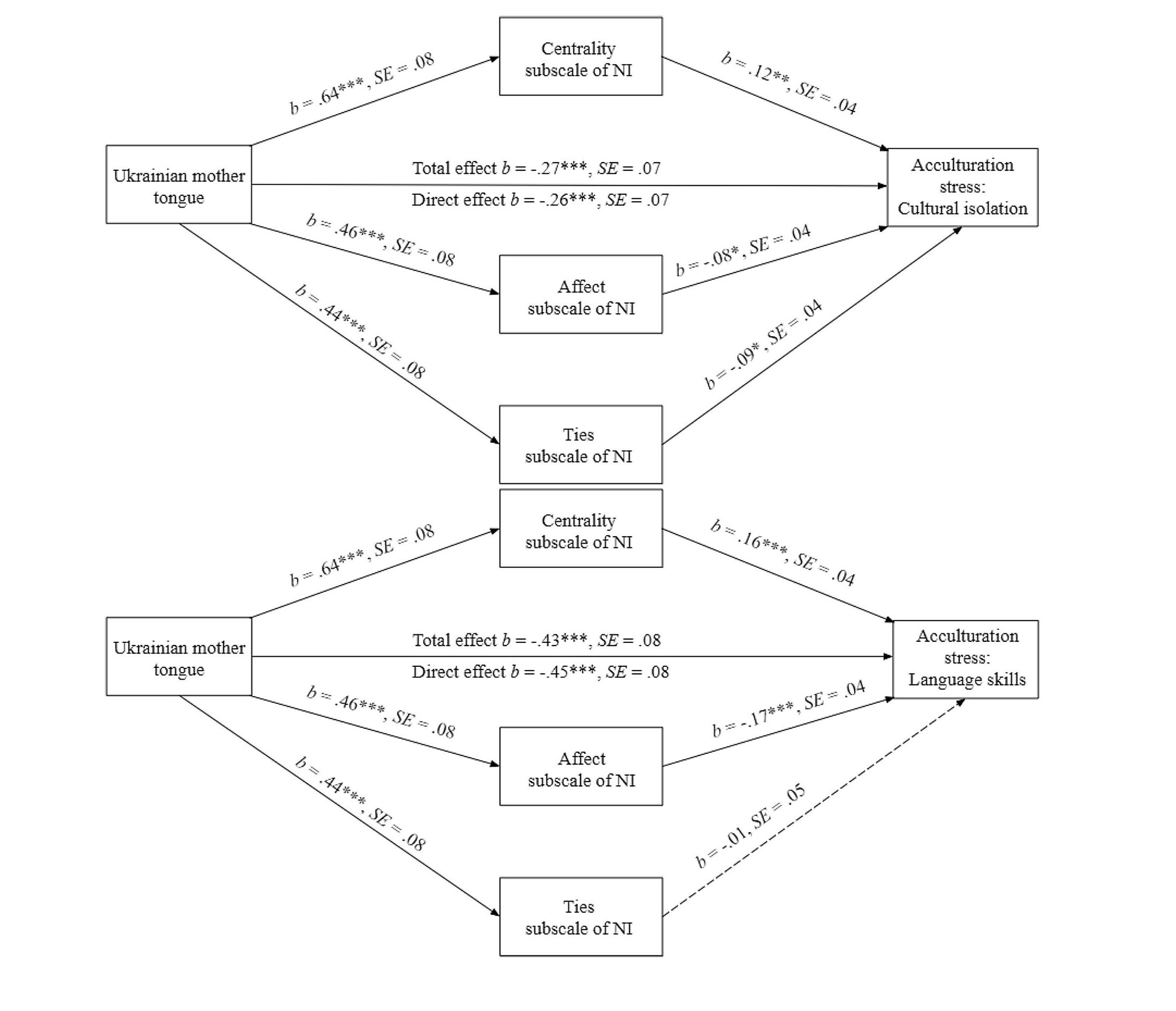
Zachęcamy do zapoznania się z nowym artykułem The double-edged sword of identification. The divergent effects of identification on acculturation stress among
Professor at the Faculty of “Artes Liberales” at the University of Warsaw; director of its Center for Research and Practice in Cultural Continuity; she obtained a doctoral degree in the humanities in 2005 at the UW’s Faculty of History and habilitation in ethnology at Adam Mickiewicz University in Poznań in

has degrees in Quantitative Methods in Economics and Information Systems from the Warsaw School of Economics and in Ethnology from the University of Warsaw. He obtained his Ph.D. from the University of Warsaw’s Faculty of “Artes Liberales”, with the dissertation, “Micro- and macro linguistic ideologies. The case of Wilamowice”. He

has a Ph.D. in cultural studies from the University of Warsaw’s Faculty of “Artes Liberales” in co-tutelle with the University of Seville’s Faculty of Philology (2018) as well as an M.A. in Polish Philology (2013) from the College of Inter-Faculty Individual Studies in the Humanities at the University of Warsaw.

has a BA in French Philology and Classics from the University of Łódź and an MA in Liberal Arts from the University of Warsaw. She has co-authored three pictorial dictionaries of Modern Nahuatl – with more forthcoming – and has co-translated The Little Prince into Wymysorys. She is employed full time

is an Administrator in the COLING/MSCA RISE and LCure/FNP Team projects, with managerial and financial experience (SGH Warsaw School of Economics). Her role is to plan and organize project events as well as manage day to day communication with partners and the Warsaw University administration.
is Profesor de educación primaria from the Escuela Normal “Manuel Ávila Camacho” of the state of Zacatecas, México (1981). He has a PhD in Literature from the University of California San Diego (1995) and was a fellow of the John Simon Guggenheim Memorial Foundation (2007). A Professor Emeritus of the Universidad Autónoma de Zacatecas and co founder and
Publikacja zawiera wielopoziomową interdyscyplinarną analizę sytuacji imigrantów z Ukrainy w Polsce. Autorzy szczególną uwagę poświęcili kluczowym wyzwaniom, takim jak sytuacja Ukraińców na polskim rynku pracy,
Mniejszości i ich języki wobec kryzysu. Pakiet antystygmatyzacyjny projektu „Językowe antidotum: żywotność językowa jako sposób budowy psychicznego dobrostanu, zdrowia i zrównoważonego rozwoju” Publikacja w języku
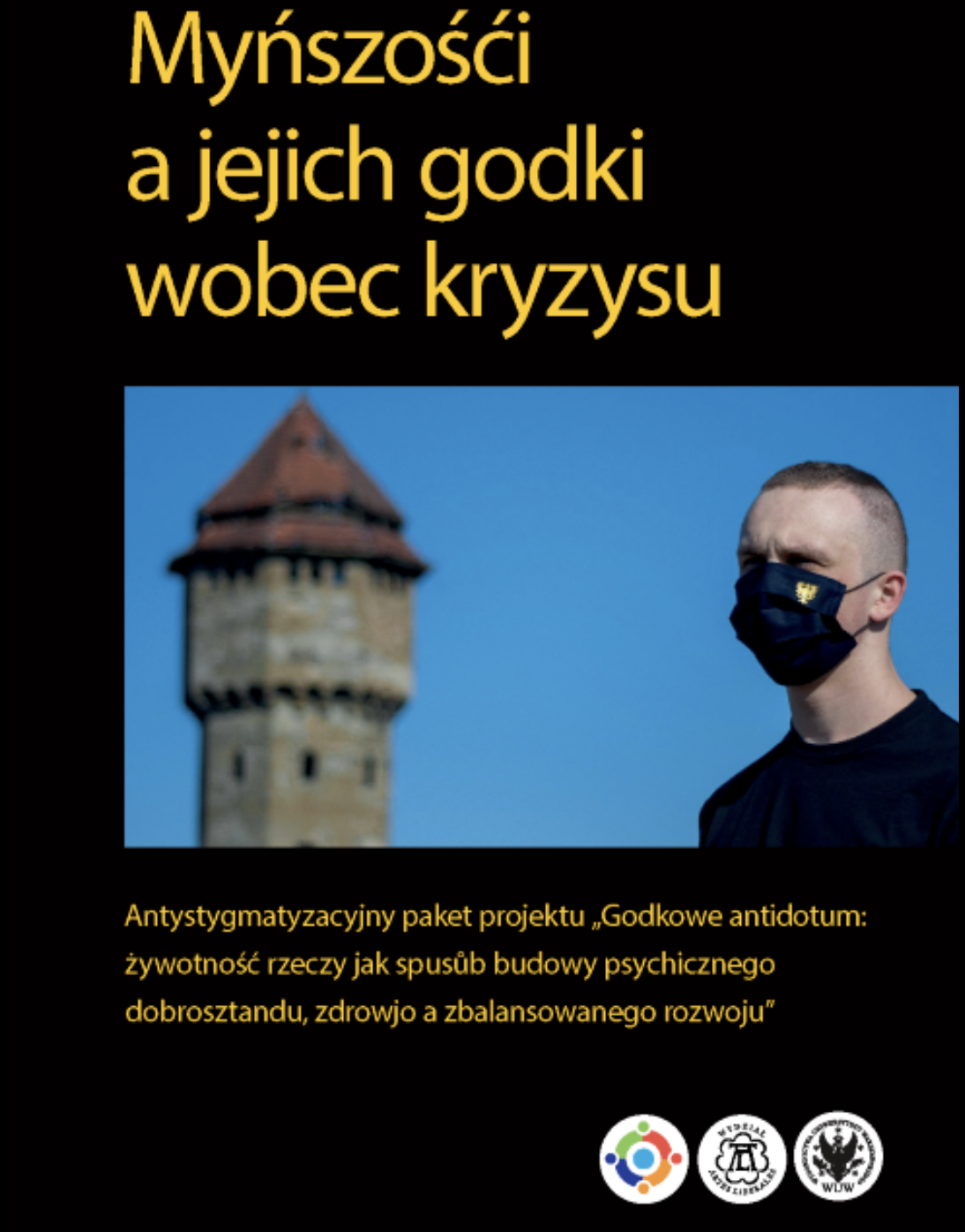
Publikacja w języku śląskim, będąca efektem projektu „Językowe antidotum”, analizuje wpływ doświadczanej przez mniejszości etniczne i migrantów dyskryminacji na ich zdrowie i dobrostan, korzyści płynące
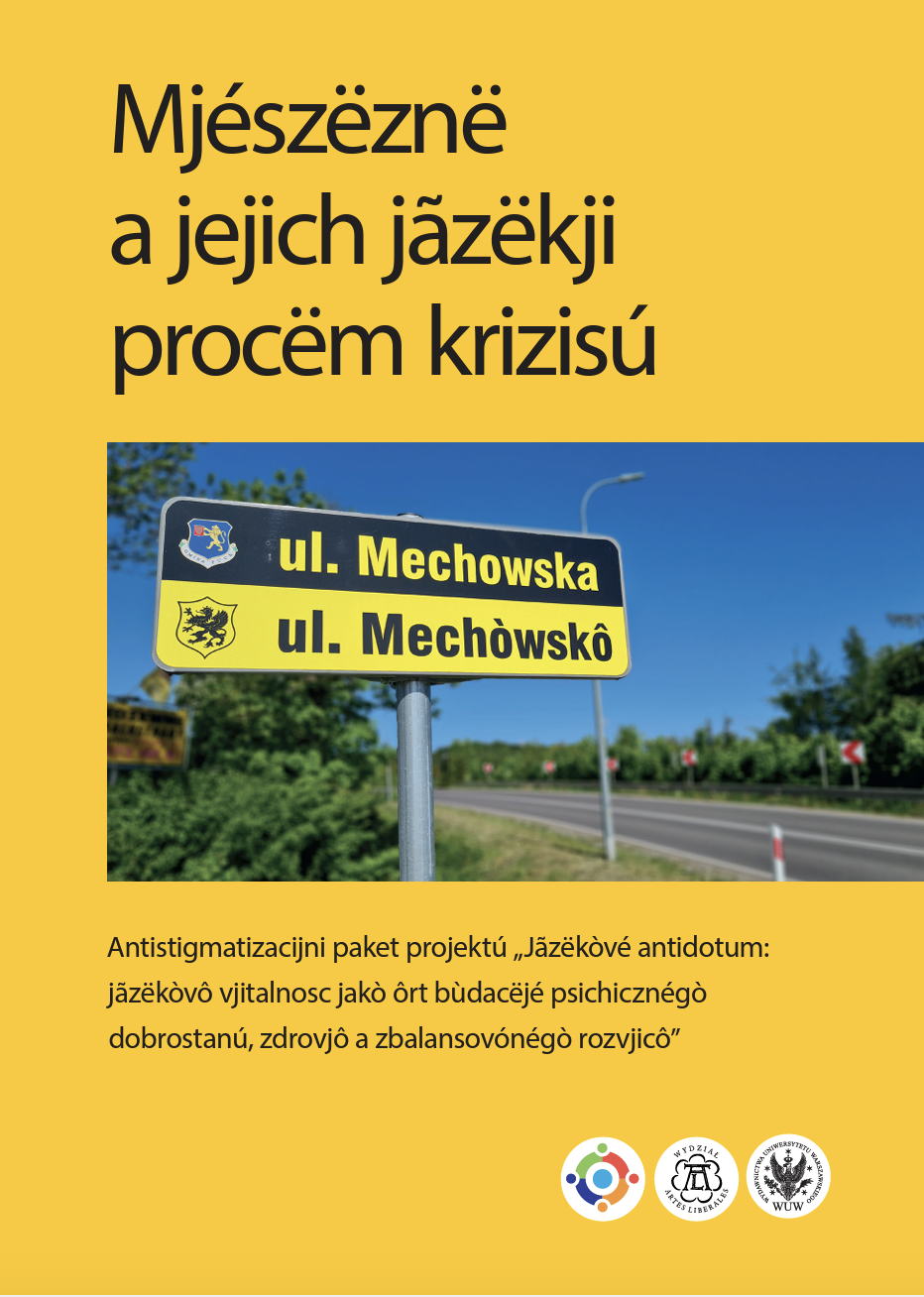
Publikacja w języku kaszubskim, będąca efektem projektu „Językowe antidotum”, analizuje wpływ doświadczanej przez mniejszości etniczne i migrantów dyskryminacji na ich zdrowie i dobrostan, korzyści płynące
Publikacja, będąca efektem projektu „Językowe antidotum”, analizuje wpływ doświadczanej przez mniejszości etniczne i migrantów dyskryminacji na ich zdrowie i dobrostan, korzyści płynące z zachowania rdzennych